
Interview: Żabka Group CEO Tomasz Blicharski
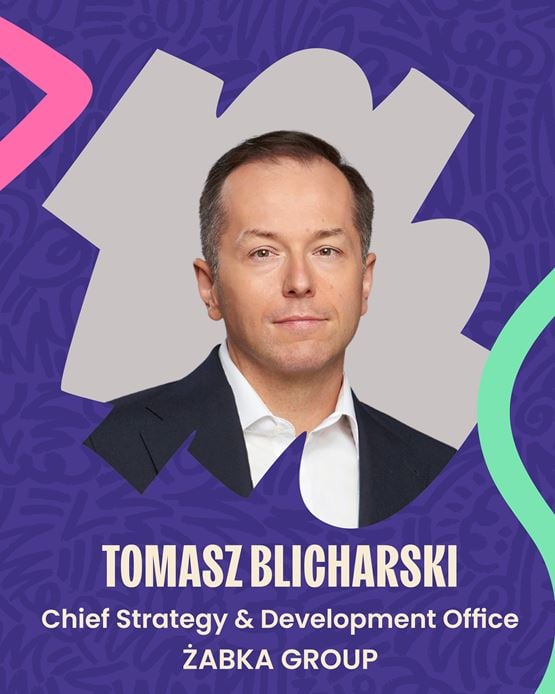
Tomasz Blicharski, CEO de Żabka Group
That has also attracted the attention of global retail. Canada-based Alimentation Couche-Tard has formally announced its intention to acquire all shares in Żabka Group, putting the Polish retailer’s rapid growth and distinctive operating model under an international spotlight.
Tomasz Blicharski, CEO of Żabka Group, says the company’s development reflects both the changing Polish economy and the changing expectations of consumers.
“Żabka has been operating in Poland for nearly 30 years. During this time, both our business and Poland itself have changed significantly,” Blicharski says. “We have evolved alongside social and economic developments, as well as changing customer needs.
“From a small chain of convenience stores, we have grown into one of Europe’s largest companies in the retail sector and an international group that combines commerce, technology and digital services,” he says.
Over the past decade, Żabka has nearly tripled its store network while sales have increased fivefold and the group listed on the Warsaw Stock Exchange in 2024. Today, customers make approximately 4.3 million transactions across the group’s stores every day and have access to more than 20 convenience services.
“Żabka is no longer simply a place for quick shopping,” Blicharski says. “We now support a much broader range of the everyday needs of millions of customers.”
The next stage is international and while Poland remains by far the group’s largest market, Romania is becoming an important test of whether the Żabka model can travel.
The group entered Romania with its Froo brand and has already expanded to more than 250 stores in just over two years.
By the end of 2028, it aims to expand the network to 16,000 locations across both countries, while maintaining a pace of more than 1,300 new store openings per year.
Blicharski says: “Our international development remains at an early stage, with Romania currently being the main focus of our activity outside Poland. We are concentrating on building and scaling the business there, while gaining valuable practical experience in operating in a new market.”
That process has already highlighted the importance of adapting the proposition to local consumers, suhc as food-to-go. In Poland, Żabka developed its food proposition progressively, while in Romania street food was built in from the outset.
“It proved to be a natural bridge to Romanian consumers and an important part of building a relevant local customer experience,” Blicharski adds. “But our growth is not only about opening new locations. We will continue to improve the efficiency of our existing stores and further develop our digital convenience ecosystem.”
He believes that Żabka’s competitive advantage lies in the combination of physical scale and digital capability rather than in either one independently and stresses that what differentiates Żabka is an integrated convenience model that combines a dense and accessible physical store network, close cooperation with franchisees, efficient logistics, technology and the ability to respond quickly to changing customer needs.
“These elements reinforce one another and create a model that is difficult to replicate,” he says, emphasizing that data is increasingly central to that proposition. Żabka uses information about demographics, footfall and shopping behavior to inform everything from location selection and network planning to the way individual stores adapt their offer.
“Technology and data are key enablers,” Blicharski says. “We combine the proximity, accessibility and everyday relevance of physical stores with digital capabilities that make the customer experience more convenient, relevant and efficient. In our view, technology does not replace brick-and-mortar stores, it makes them more valuable to customers and more effective for franchisees.”
That philosophy has also shaped Żabka’s approach to sustainability. The company says it is integrating environmental and social considerations into operational decision-making, reducing the group’s carbon footprint, maintaining the relevance of its product offer and considering its impact on employees, franchisees and local communities.
“Reflecting these priorities in the KPIs of managers and employees helps us turn commitments into concrete actions and build solutions that create long-term value,” he says.
Żabka has attempted to build an organization capable of moving quickly from identifying a change in consumer behavior to responding through its stores, technology and services.
“We will continue to invest in technology, data and solutions that further strengthen the connection between our physical and digital capabilities,” Blicharski says. “Instead of focusing on a single trend or a single element of convenience, we build an ecosystem around customers’ evolving daily needs.”
But he cautions that despite ambitions to grow, scale on its own is not enough.
“Long-term growth depends on deep customer understanding, agile teams, technology, long-term investment and strong local partnerships supported by real-time data,” he insists.