
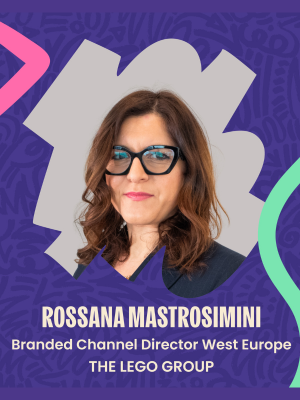
Rather than focusing solely on driving sales, LEGO wants its stores to become destinations where customers immerse themselves in the brand.
"Our evolution has included strategic partnerships, immersive in-store activities and a focus on creating cultural and social value, not just economic value," Mastrosimini said.
That strategy has become increasingly important as LEGO serves an audience that now stretches far beyond children. The rapid rise of adult fans with the huge movement around nostalgia and retro, alongside traditional family shoppers, means stores have to appeal to very different motivations.
"We tailor our portfolio, retail presence and marketing strategies around several key pillars," she said. "For children, our products prioritise imagination and learning through play, while for adults we offer experiences centred on mindfulness, creativity and nostalgia."
Although LEGO maintains a consistent global brand identity, Mastrosimini said execution varies significantly between markets.
"In emerging markets such as China, we're focused on building brand awareness and expanding our retail footprint," she said. "In more mature markets, the emphasis shifts towards retail innovation and strengthening our direct-to-consumer relationships."
Localisation also extends beyond product ranges and she stressed that LEGO’s destination stores feature location-specific visuals and displays that reflect local culture, helping transform them into landmarks in their own right rather than simply “another retail outlet."
One of the biggest influences on LEGO's retail strategy has been the company's growing portfolio of gaming and entertainment partnerships.
"The LEGO Group's expansion into gaming platforms and film partnerships directly influences how we design and manage our physical retail spaces," Mastrosimini said. "Our stores are not static points of purchase. They are interactive extensions of digital and cinematic worlds."
And rather than simply merchandising licensed products, LEGO reshapes entire stores around major launches.
"When a major film or game launches, our stores transform into active play hubs," she said. "We create experiential 'phygital' zones with hands-on demonstrations that allow customers to engage directly with the stories and characters they already know."
The company's flexible store formats also allow layouts to change throughout the year as entertainment calendars evolve.
"We create life-sized sculptures, thematic displays and immersive experiences that drive footfall and encourage customers to share their visits on social media," Mastrosimini said. "Shopping becomes an extension of the entertainment experience."
That philosophy also informs the way LEGO approaches customer engagement and the company offers "exclusive tactile experiences" including Pick a Brick Wall, Build a Minifigure, personalised Minifigure printing and Make & Take events. These experiences are designed to encourage customers to personalise their visit while giving them reasons to return. Exclusive products linked to major launches also help strengthen customer loyalty.
"Our loyalty programmes provide access to rare collectible sets tied to major entertainment releases, creating additional value for our community, " she added.
For Mastrosimini, however, the success of physical retail still depends on people rather than technology.
"Our retail staff are trained as play ambassadors," she said. "Their role is much more than serving customers. They guide visitors through building challenges and storytelling, helping convert digital enthusiasm into meaningful physical experiences. We focus on immersive and interactive experiences that encourage creativity and engagement. Customers can personalise their experience, making every store visit memorable and unique."
The strategy also reflects broader changes in consumer expectations around participation and co-creation.
"Through initiatives like LEGO Ideas, fans actively contribute designs, while our in-store personalisation experiences allow customers to become co-creators rather than simply consumers, " she said, adding that sustainability has also become an increasingly important consideration.
"We continue to invest in sustainable materials and circular economy programmes because consumers increasingly expect brands to manufacture responsibly," Mastrosimini said.
As for ‘marketing with a twist,’ Mastrosimini argued that traditional retail metrics alone no longer define success.
"It means transforming stores from mere sales points into vibrant, engaging hubs that build long-term brand loyalty," she said. "Instead of focusing on immediate conversion, we prioritise play and discovery."
That means turning "store aisles into interactive playgrounds and cultural exhibits," while offering opportunities for personalisation through experiences such as the Minifigure Factory, and Mastrosimini believes retailers need to create reasons for consumers to visit that cannot be replicated online.
"I hope NRF Europe attendees leave with an understanding of how The LEGO Group's retail approach creates value beyond sales. By building cultural and social connections and offering memorable experiences, we inspire creativity, strengthen communities and create retail experiences. "Our objective is to create memorable in-store moments that naturally lead to purchases," she said. "The experience comes first."