
Interview: Yum Brands Market Lead Data EMEA Jordan Uzan

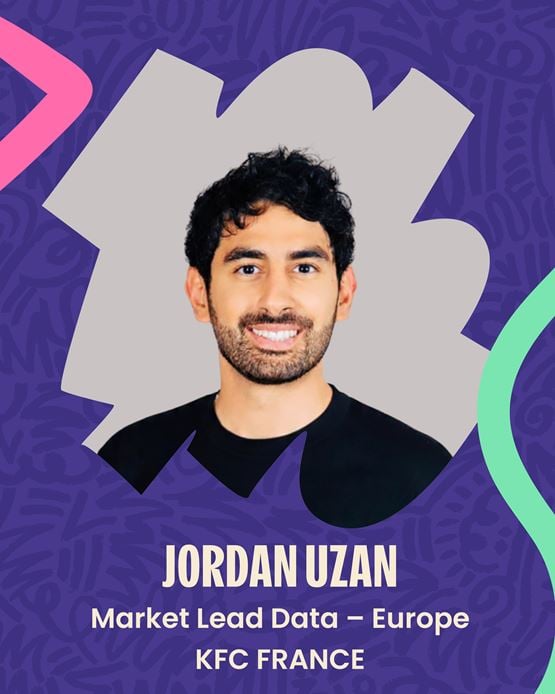
Yum Brands Market Lead Data EMEA Jordan Uzan
“At KFC France, that's particularly valuable because customers move seamlessly between the app, kiosks, drive-thru, front counter and delivery. My focus has been connecting those touchpoints payments, POS, loyalty and operational data into a single ecosystem.”
He believes that what makes QSR unique is that the operators in the sector do not stop at the transaction but also measure the speed of service and satisfaction achieved.
“For me, a payment without its execution time only tells half the story. Today, AI works mostly behind the scenes. It connects those signals, detects patterns in real time and helps us understand customers rather than just process transactions,” Uzan stresses. “But AI is only as good as the payment data it's built on.”
He describes the current evolution as moving from digital payments to intelligent payments, meaning that the customer will no longer think about choosing a payment method anymore when they order online or visit a store.
“AI will increasingly orchestrate the entire journey, selecting the right wallet, applying loyalty automatically, recommending the next best offer and, eventually, preparing the payment before checkout. But the real transformation isn't AI, it's data,” he says.
“At KFC France, we've focused on connecting payment, loyalty and operational data into a single real-time platform. That foundation allows us to move from static campaigns to contextual, real-time decisions. I don't believe customer segments should be predefined anymore. I believe customer behavior should define them. AI simply gives us the ability to recognize those patterns instantly and act on them. Ultimately, the future of payments isn't about paying faster. It's about making payment so contextual and seamless that it becomes almost invisible.”
In the quick service sector, it is also vital to look at pain points and additional seamlessness and the removal of friction through using AI, he says. And Uzan emphasizes that the biggest friction in this isn't always customer-facing but rather the gap that exists between systems.
“Payment, loyalty, digital and operational data often live in separate environments, making it difficult to understand the customer journey as a whole. AI changes that. It can connect those signals, detect patterns in real time and understand the logic behind a customer's actions switching channels, changing payment methods or modifying an order,” Uzan points out.
“That's something a human simply can't do at scale. In QSR, we combine transaction data, payment data, speed of service and loyalty. A payment tells us what happened; operational data tells us how it happened. Bringing both together allows us to personalize the experience in real time. For me, the real value of AI isn't making payments faster it's making the entire journey smarter, more relevant and native.”
Internally, the approach to the adoption of new technology is also vital and the question for many organizations is whether it should be delivered by a specialist team or embedded across teams.
“For me, it starts with a specialist team, but it can't stay there,” Uzan reflects. “A central team is essential to build the foundations architecture, governance and shared standards. That's exactly what I've been focused on at KFC France, connecting payments, POS, loyalty, digital channels and operational data into a trusted ecosystem.”
He adds: “But technology is only successful when the business owns it. Marketing, operations and IT need to see AI as a tool that helps them make better decisions, not as a separate project run by data experts. So, my approach is simple: build the foundation centrally, then embed the adoption across every business function. That's when AI starts creating real value.”
For those attending in Paris, he says that if there is one message he would like people to remember it is that AI is not the starting point but rather payment data is.
“The organizations that will succeed aren't the ones with the most AI tools. They're the ones that understand their customers best. For me, the future of payments isn't about making transactions faster, it's about making them so seamless and contextual that customers barely notice them,” Uzan says.